Category Archives: Fiction

THE END OF PARADISE. A forgotten short story.

In the months since I last posted here, I finished my ninth novel, THE BURIED LIFE (to be published March, 2025), I’ve been snow-shoeing in the Arctic, and I’ve been going through old files, jotting ideas for new essays, and working on some existing ones. So – there will be less neglect of this site in the future.
I’ve never considered myself a short story writer even though my first publications were short stories. The long form of the novel suits me better. So I was surprised to discover a forgotten story, THE END OF PARADISE. It was published in the Sunday Age, January 5th, 2003 – still a broadsheet then, in their summer series of fiction, and yes, there was fiction in the newspaper back then.
In the original there was no space between paragraphs and proper indenting – so apologies for the format here.

THE SUNDAY AGE. 5/1/03

Part of the Summer Reading Series

THE END OF PARADISE

Emma Klein’s was the sort of beauty that held your gaze and turned it soft. If Tony Drummond were to capitulate to a shallow moment he would admit her face had been the initial attraction. And while it was joined by others in the time they spent together, the face remained the primary lure. 

Of course it would be different now. In the 15 years since their affair, Emma had evolved from beautiful, unknown film student to beautiful, celebrated auteur. With brains and beauty she was, according to Tony’s colleague Jeannette Redi, the full quid. Which explained why Tony was now at his keyboard, pondering what to write to a woman he’d not seen for years, a woman who would not be much interested in him if she’d opted for suburban anonymity, much less an international film career.

The truth was that Tony had done her wrong, so wrong that if his own career prospects were any less precarious he would be leaving Emma Klein undisturbed in his past, neatly shaped by a memory devoted to his own well-being. Unfortunately, this same well-being was now under threat. Hurtling towards 50 and still not a senior lecturer, with no major publications and economic rationalisation ripping through the fibres of higher education, if Tony didn’t come up with a research project soon, it would be a redundancy package and time to kill.

Jeannette Redi had been right.

“You know Emma Klein?” Jeannette had been incredulous. About to leave the Faculty Club where she and Tony had eaten lunch, she settled back at the table and ordered another coffee.

“It was an age ago,” he said, in an attempt to curb her interest. “Long before Sup with the Devil. Long before she was famous.

“But don’t you see, Tony? She’s the answer to your problems. She’s your promotion. At the very least, she’ll save your job.”

Jeannette might have been less enthusiastic if she’d known the whole story. Tony had been a tutor, Emma his brightest student; he had done what tutors did prior to anti-discrimination and sexual harassment laws, she had fallen in love; he had pressed his body, she her devotion; he had provided an A-grade performance in sincerity, she had offered the authentic thing. After she handed in her final assignment he had tried to let her down gently, then less gently, then plain bluntly. He hadn’t asked for her love, he said, and he certainly had no use for it now.

He had behaved badly, no doubt about it, but then he’d always been susceptible to appearances and Emma Klein had appearances down pat. Her black hair flicked around her face, falling thick and touchable over her shoulders. The skin was richly olive, suggesting not-too-distant Sephardic ancestors. Then there were the eyes around which the whole face congregated.

Tony regarded himself as something of an expert in eyes. Not long before he met Emma, he had drafted a paper on the problem of eyes in literature. Eyes, he wrote, had been forced to reveal, hide, deceive, promise, condemn, betray, deny, love, hate, envy, even murder. This was plain absurd: eyes simply did not have such a large and readily interpretable repertoire. But after meeting Emma he had been forced to revise his opinion, although it was clear that most writers had been profligate in their use of what is an uncommonly rare phenomenon. Emma Klein’s eyes were large and shimmery and the colour of charcoal. Tony would imagine entering those eyes, soaking in them, stroking, floating, and finally coming to rest in paradise. Emma Klein’s eyes were explicit and unambiguous, and they expressed sex.

The coffee arrived, and with it, a thoughtful silence.

“She’s perfect,” Jeannette said finally. “Emma Klein is simply perfect. Superb body of work, solid queer credentials –”

“Not when I knew her.”

“I mean her films, Tony. And no critical study of her yet. A public persona but strangely elusive –”

“She never used to be –”

” – and in her prime. Cross Jacques Rivette with Kathy Acker,” Jeannette sucked the dregs from her coffee cup, “and you have tenure.

Believe me, Tony, I know these things.”

About this there could be little dispute, despite Jeannette’s being short on facts in Emma Klein’s case. Ten years younger than Tony, Jeannette Redi had entered the cultural studies department at senior lecturer level and was now in pole position for a professorship. If a career path could be paved with gold, that was Jeannette’s. She was queer before queer became fashionable and a lesbian long before lesbian chic. By the time fashion caught up, people were quite prepared to believe that Jeannette Redi, innovative theorist and charismatic teacher, was responsible for the gender meltdown that characterised queer theory. Being bright rather than brilliant, and with enough ethnicity to make her interesting but not so much as to cause discomfort, Jeannette was equipped with all the accoutrements of the successful academic.

With so much in her favour, and with academics being such envious adders, Jeannette should have been universally hated, particularly in a department so riven with factions that from one month to the next Tony might never find a friend in the staff room. Yet everyone liked her. Even during a brief lunch with a colleague there were smiles to return, hands to shake and comments to be exchanged with an assortment of passing academics, even a couple of physicists. For Jeannette, a room full of people was an orange to be squeezed, and how efficiently, how admirably, did she collect the juice.

Tony settled back into the leather while she finished with the physicists. The leather chair of his Faculty Club, at his university, the university he loved and did not want to leave. But unless he came up with a grant-attracting project and a publishable book, he’d be applying for jobs in god knows what corner of the country. Or, worse still, in New Zealand.

“What do you know about New Zealand?” he asked when the physicists moved off.

“OK to visit, but you wouldn’t want to live there.”

“People say that about Melbourne.”

“Only if they come from Sydney.”

Jeannette leaned forward to remove some fluff from her trousers. Her shirt was white and silky and fell away from her body, revealing the upper curve of her smooth brown breasts.

“Emma Klein, Tony. Or else you might find yourself teaching high school in Tasmania.” Jeannette paused to brush cheeks with the professor of politics. “She’s your promotion. I wouldn’t have mentioned it if you hadn’t admitted to knowing her.”

As he headed back to his office Tony replayed Jeannette’s arguments and realised she was right. Yet what he really wanted to write was a monograph on Shakespeare in film. Or to be precise, King Lear. For, with his own daughter now an incomprehensibly hostile 12-year-old, a critical examination of Lear had acquired a certain urgency.

He had as much interest in queer theory as he had in revisiting Emma Klein. Not that he hadn’t thought Sup With The Devil remarkable. Emma had always plunged into the big pools. She was the only young person Tony had ever met who had read Proust, not for a course requirement, but because she had been told it was the memory equivalent of conquering Everest.

Old and weighty ideas had always attracted her and there were plenty in Sup With The Devil. Such an immensely watchable film – some of the theorists had been suspicious of that – yet traversing the fundamentals of human existence. Evil and love fought it out in the final scenes and while it remained unclear which was the winner, there was a beguiling sense of satisfaction, of fulfilment when the credits started to roll.

That Emma had not done anything as good since had worried certain critics, but not Tony. Years ago he had planned a book about the cultural mismanagement of genius. How, when a work of genius is produced, if it is not immediately followed by another, the very fact of the original work of genius is used as evidence of the author’s failure. It was Tony’s contention that since works of genius, like geniuses themselves, are staggeringly rare, to produce one in a lifetime is to triumph over the odds.

The genius idea still interested him, and as he settled at the computer, he was tempted to resurrect his old notes, just a brief hesitation before going online and doing a search on Emma Klein. Both genius and Lear would have to wait.

*******************

When the invitation to address students and faculty at her old university had arrived, Emma’s first reaction was to decline. Then she quickly made the correction, reminding herself that old habits endure long past their relevance date, and that her pain over Tony Drummond was not only 15 years old it was also 15 years out of date.

Her agent had offered to accompany her, but Emma had long ago learned that when your past, so foreign to everyone else, catapults into your present it is better to withstand the collision alone. She was met at reception and taken to the conference room. She paused in the doorway, just a fraction of a second, in order to find him before he saw her. And there he was, across the room and turning towards her. And in that first sighting of the man who had seized her young heart and smashed it, a flushing of fear. 

After 15 years. Fifteen years, nearly half a lifetime. How tenacious are one’s old pains, she thought, and how shamelessly inappropriate. She forced on herself a composure she did not feel, and by the time he was leaning in to kiss her cheek, she appeared quite calm.

His skin did not feel familiar, which surprised her. For in that typical journey of male maturation, commencing with an almost feminine boyishness in the 20-year-old and ending with the thickened features and coarsened skin of the fully-fledged man, Tony Drummond had been spared. He was, perhaps, a weaker, blurred version of his younger self, but there was still the same softness, the sleek blondness, the same grace that captured her heart all those years ago. Yet in the older man, faintly disturbing. His skin so smooth and unmarked by concentration or determination. No lines about the eyes, no scoring of the brow, no confusion or sorrow or amusement. It was an unlived-in face, she found herself thinking, a man untried and untravelled, as if he had spent the past 15 years cocooned among kind and unchallenging people in whom any extremes of emotion had been nicely dampened, and any failures banished.

He still sported the look of those beautiful young men in BBC dramas set in Oxbridge of the ’20s and ’30s; in fact, many people used to assume he was gay. He once confessed to her that he had actually tried a man, bisexuality being an ideal option for a male with a large sexual appetite in the pre-AIDS era. But it was not for him. Tony Drummond liked the truly effeminate; he liked women.

He was offering her a drink, and although Emma wasn’t thirsty she let him insist. She watched as he crossed the room. He still dressed with casual ease, although instead of the old suede jacket there was now a tailored blazer, and the hand-knitted scarf had been replaced by a Burberry. But the washed-out Levis looked just the same.

As he poured the drinks, his back towards her, a memory surfaced of a day in the country not long before the end of their relationship. Tony had proposed a walk along a narrow bush track he had recently discovered with the woman who was shortly to replace Emma in his extra-curricula affairs. It was, he said, only a 15-minute loop through rainforest and down to a dark, lush palm gully, the sort of limited rural romp with which Emma, a dedicated city girl, could cope.

Whether it was the wrong track or they’d missed a turning, they were still walking an hour later. Yet Emma had not minded. Such pleasure to be found in the movement of his body as she trailed after him along the narrow track. He darted over the rough ground, sure-footed and graceful as a deer. And Emma followed, tripping now and then over obstacles in the path, watching the curve of his buttocks beneath the well-worn denim, the square bulge of notebook in his back pocket, but most of all the dance of his body, a light rhythmic spring – still noticeable in his gait today – and so nimble as he skirted logs and leapt over rocks and roots.

She had commented on his agility, and he had laughed: he’d had plenty of practice avoiding the landmines at the university, he said.

They had by this stage reached the palm gully. It was only mid-afternoon, but dark as dusk and very still. They stood in the thick green undergrowth beneath the canopy of palms. In the distance was the faint whisper of wispy gums in the light afternoon breeze. It was one of those sublime moments, so rare in a life, when you’re not alone but the solitude is complete. 

She had draped an arm around him, and her hand grazed his buttocks. The denim was soft and thin and she had felt his muscles tighten, and right there on the narrow track where anyone might have stumbled upon them they made love. Afterwards, as they walked back, she realised she wanted to spend the rest of her life with him. He was perfect and she loved him.

Now as she watched him come towards her with their drinks, this man who had once stolen her heart, she was aware of that raw nervy reluctance when long-held beliefs are finally challenged. How willingly are old sufferings transformed into sacred cows, she was thinking, and how mindlessly. And as she took the drink – her hand now quite steady, her heartbeat slow – she felt like a stranger to herself, a sudden brief disorientation, rather like that moment when you first slip into new clothes and before you see how well the style suits you.

She started to laugh; she couldn’t stop herself. It was an explosion of fantastic energy as an old demon became domesticated. One minute she’s a snivelling bundle of fear and the next she’s sharing a drink with him. She’d lived hard and full, she had a son she adored whose father was proving a far better ex-husband than he had ever been a husband, she’d had lovers and she had many friends, she’d worked and travelled, but always that chill spear plunging through her whenever she thought of Tony. And now it was gone. In a flash it was gone.

Emma was about to enquire about his life, disinterest making her courteous, but she was interrupted by Jeannette Redi, the woman who had invited her to the university. Tony slipped away and did not appear again until her presentation was about to begin. He couldn’t wait any longer, he said. He had a proposal: he wanted to write about her and her work.

Emma indicated the waiting audience, this was not the time for discussion, and moved towards the podium. She was astonished: only a fool or a masochist would give herself away cheaply more than once.

The audience settled into silence, a room full of strangers and the one familiar face warmly smiling up at her. She glanced at her notes. The title of her presentation, “My Life in Art”, had suddenly taken on new possibilities.

“When life becomes art,” she began, “then you’ve moved on.”

For half an hour she talked in that confidential, faux-private style common among seasoned performers, while at the same time aware of the nudge and texture of the film she would next make, at first faint but becoming clearer by the minute. It was exhilarating, as the first glimmerings of a new work always are.

In the audience Tony was soaking her up. The mature Emma Klein had all the old attractions and a great deal more. She would be such an asset on the media circuit when his book was published. He’d not been this excited in years. He listened, he looked, he took notes. And when Emma finished, he dashed to her side. But she couldn’t stay, she said, as she slipped his card into her bag, she was already late for another appointment.

Over the next month he waited to hear from her. He rang her agent several times. The agent never returned his calls. He was not discouraged; he was working well. On the day Jeannette buzzed him suggesting a coffee, he was happy to oblige. He had, he believed, mapped out a structure for his Emma Klein book, and the person who deserved to see it first was Jeannette.

When she paid for their coffee and cake he should have been warned. And when she plied him with questions about Emma’s early life he took it as nothing more than her on-going interest in his work. Even when she came to his office again and again over the next few weeks to ask about Emma, he was blind to his role as literary cuckold. It took a hefty ARC grant to Jeannette Redi and a sympathetic graduate student to enlighten him.

***************

The redundancy package was generous – the university was eager to be rid of him – and life in far north Queensland was far more congenial than its reputation among the southern intelligentsia had suggested. The sympathetic graduate student was fortunately less committed to her studies than she was to her supervisor, and separation rather than Shakespeare had been the answer to the problems with his adolescent daughter – with his former wife too.

As for Emma Klein’s new film, The End of Paradise, and the simultaneous release of Jeannette Redi’s new book, distance protected Tony from the gossip and media hype. His well-being, the focus of a lifetime’s ambition, remained intact.


AN UNRELIABLE MARRIAGE. The writer’s life and the life of the work

Flaubert said: ‘Emma Bovary, c’est moi.’ Can he be trusted? Should he be trusted? And if it were true, does it enhance the reading of Madame Bovary

We live in the Age of the Individual. Personal experience reigns supreme. Descartes’ Cogito ergo sum, I think therefore I am, has become I AMTHEREFORE I AM.

One need look no further than memoir for evidence that the self and the individual have become the project par excellence. Memoir is thriving, and not just for those with a public life: anyone can and is co-opting the form. Publishers love memoirs – because memoirs sell. It seems that in these days of Facebook and the like, we can’t get enough of other people’s private lives. 

Without a societal focus on the individual, without a significance accorded to the ‘truth’ of individual lives, the issue of author biography and its relationship to the author’s fiction and/or poetry, would probably not arise.*

Like many others, I believe that a poem or a novel needs to be able to stand alone, separate from its author, otherwise it will have no life. A glance at the work that has survived down the years: Shakespeare, Austen, Dickens, both Eliots George and T.S., Keats, Coleridge, the Brontës, it is clear it is the work that matters. After all how many readers know about Shakespeare’s son, Hamnet who died at the age of ten? How many readers know about T.S’s conversion and his treatment of his wife Vivienne, and George’s sinful life with a married man? How many know about Coleridge’s opium habit and the Brontës difficult dad? And does it matter? This work lives on, the work thriveswithout knowledge of the author’s life.

The fact is, we humans have not fundamentally changed in the past 4 millennium – since we started writing things down. And those works that endure are those which explore and tap into fundamental – and enduring – human qualities: love, jealousy, joy, revenge, envy. 

And yet there are certain classics in which knowledge of the author does help, and certain others wherein biographical fixing is essential for any significant understanding. 

Much of Henry James’s work centres on wealthy and naïve Americans lost in the clutches of old Europe. It can enrich a reading of Henry James to know he was an anglophile and ex-patriot American – but it’s not essential. 

It deepens understanding when reading Animal Farmand 1984to know that Orwell was a socialist, ardently and critically opposed to Soviet communism. It further helps to know that the left was polarised between Communists and anti-Communists. Of course, reading Orwell’s marvellous essays would provide all the information required. 

It helps, in reading Thomas Mann’s Magic Mountain, to know that Mann opposed the Nazi regime and was forced into exile because of it.

In contrast, there ARE certain works in which the author biography is essential.

Much of Sylvia Plath’s work, for example, although in some instances the biography has overwhelmed the art.

And Proust. All those heated, sexless, obsessive loves with girls in A la recherche du temps perdu, these make a lot more sense when informed by Proust’s homosexuality. And this novel, deeply concerned with the aristocracy and social class, acquires greater meaning when Proust’s Jewishness is taken into account.

And Oscar Wilde’s DEPROFUNDISmakes no sense whatsoever without the biographical details (Bosie, Lord Alfred Douglas, the terrible trial and Wilde’s subsequent imprisonment). 

SOCIAL AND POLITICAL CONTEXT

Rather than specific biographical detail, often what is required in deriving the most from a novel or poem is a knowledge of the social and political context surrounding the author. Pasternak and the other great 20thC Russian writers writing within the strictures of Stalin’s regime are prime examples; Dante’s Divine Comedy, with all those notable C14th Italians confined for all eternity in the circles of hell, is another; Coetzee’s Disgraceand Justin Cartwright’s White Lightning, make little sense if unaware of South African Apartheid and the post-apartheid period; an understanding of the poetry of Paul Celan requires a knowledge of the Nazi atrocities; the work of Kamila Shamsie and Mohsin Hamid makes little sense without a knowledge of the widespread persecution of Muslims; and full appreciation of books from indigenous Australians like Melissa Lucashenko and Tara June Winch requires a knowledge of the history of dispossession and discrimination against aboriginal Australians. Beyond the world of print, Picasso’s ‘Guernica’ and Shostakovich’s ‘Leningrad’ symphony (premiered during the siege of Leningrad) as two works whose meaning is firmly attached to the prevailing social and political context. 

But history is in trouble at the moment. 

We live in an ever-present. The present shouts at us 24 hours a day. There’s the 24-hour news cycle. There’s Twitter. There’s an avalanche of notifications. A knowledge of history was, not so long ago, considered to be crucial for the well-rounded, well-educated person, but not any more. The phone is now the beating heart of the 21stcentury individual. 

What history remains is often, blatantly, in service to the present. I know I am not alone in the irritation engendered by all those period TV series, more concerned with today’s mores than any sort of verisimilitude, depicting aristocratic dinner tables with black people sitting as equals with the white lords and ladies. We moderns might well wish it did happen like that back then – I certainly do – but it didn’t, and indeed, in some parts of the world it still does not happen. (It’s interesting to note that Britain was supporting slavery when many of these period dramas were set.)

Yet so many of the works of the past, if they are to be appreciated fully, require some sort of social and political context. 

So, rather than Orwell’s life, a knowledge of the times in which he wrote, the ardent communists and the equally ardent anti-communists, the pervasive influence of the Russian Revolution, the demise of imperial Britain, these flesh out his work immeasurably.

A good deal of Osip Mandelstam’s poetry makes much more sense when you know about his persecution and exile, when you know what the Soviet regime demanded of its artists – its most creative citizens. 

Take, for example, Mandelstam’s famous poem about Stalin, for which the poet was cruelly punished. The poem makes no sense at all without the historical details. The ‘Kremlin Mountaineer’ in the poem, who comes from Ossetia, a region in Georgia, is Stalin.

MANDELSTAM POEM ON STALIN (NOVEMBER 1933)

We live, deaf to the land beneath us,
Ten steps away no one hears our speeches,

But where there’s so much as half a conversation
The Kremlin’s mountaineer will get his mention.

His fingers are fat as grubs
And the words, final as lead weights, fall from his lips,

His cockroach whiskers leer
And his boot tops gleam.

Around him a rabble of thin-necked leaders –
fawning half-men for him to play with.

They whinny, purr or whine
As he prates and points a finger,

One by one forging his laws, to be flung
Like horseshoes at the head, the eye or the groin.

And every killing is a treat
For the broad-chested Ossete.

FROM THE CLASSICS TO THE MODERNS: and the new issue of CULTURAL APPROPRIATION

My second novel, Modern Interiors, was published when I was 41 – though, at the time, I could have passed for a good deal younger. The central character of that novel is 62-year-old Philippa Finemore. On several occasions when I gave talks or readings, people would come up to me afterwards and say how surprised they were to discover how young as I was. 

The implication was clear: readers assumed that Philippa Finemore was based on the author’s life/experience. Why would a youngish woman be writing about a much older one?

The answer involves curiosity, exploration of certain ideas and the wonderful imaginative ride that is fiction. 

Fiction is a work of the imagination – that’s what makes it fiction. To write about Caesar one does not have to be Caesar. A novelist has 2 or 3 or 4 years to write a book, which is ample time (and a gift, too) to explore what is not known or particularly familiar. However, the contemporary issue of cultural appropriation undercuts this fundamental quality of fiction.

Fiction and poetry are works of the imagination. They are made up. If a writer were forced to write from her own life and her own personal characteristics: white, Australian, Jewish, childless, sexually slippery – how dull and boring this would be. Fiction provides an opportunity both for the writer and the reader to go places they have never been, to enter the hearts and minds of people (characters) they would never meet, to time travel. That’s what fiction does. 

The cultural appropriation argument puts the imagination in lockdown, it starves fiction and poetry of its essential fuel. As a writer I don’t want to be confined in this way. Currently I am writing a character from a Pentecostal family. Some Pentecostals might think I have no right. I would disagree: within the context of the novel, the Pentecostal character serves a narrative purpose. In my last novel, Invented Lives, the central character was Russian – I’m not. I created her family background through the Stalin years. I made her an immigrant to Australia – I’m not. I gave her the experience of exile – I have never experienced this sort dislocation. Fiction draws on the imagination.

I am less sure about this standpoint when it comes to writing from the point of view of a character who is an aboriginal Australian. As aboriginal writers have made clear to me, when you’ve been silenced for so long, when not simply your voices but your culture has been appropriated for reasons not yours, then a white Australian writer would be perpetuating old wrongs if she were to write an ‘aboriginal’ novel. And yet, as a writer whose novels are mainly set in contemporary Australia, I do not want aboriginal people to be absent from my books. (As I do not want Jews to be absent, and back in the days when being gay was still a criminal offence in some Australian states, I wanted gays in my books too.) 

I had an aboriginal character in The Memory Trap. She’s a uniting church minister. She’s strong, her experience of grief is illuminating, it’s a positive portrayal. She has an important role to play in the context of the novel. I was comfortable writing her, and there’s been no criticism. 

THE MAJOR PERSONAL CONNECTION WITH A BOOK, IS THAT BETWEEN BOOK AND READER – NOT AUTHOR AND READER.

A poem or a novel must connect with the reader’s biography, their sensibility, their memories, their experiences, their longings and hopes, and the issues that are compelling their attention at the time of reading. Otherwise the book will have no impact. With this in mind, knowing an author’s biography can actually intrude and diminish the power of the work for the reader. We don’t want to fill in all the spaces, after all every reading is an act of freedom – and for every reader it is an act of the imagination.

We’ve all had the experience of picking up a novel and putting it down again. It simply does not connect. But three years later you pick up the same novel and it takes hold of you. And the reverse: novels that claimed us in our twenties but fall flat decades later. 

Reading is a great intimacy. While you are reading there is the world of the book and your active imagination. It can be and often is an illuminating experience. And because different readers bring to the book different memories, different longings, different knowledge, different beliefs, so there are many different readings of the same novel. This connection between novel and reader, or poem and reader is the one that matters. 

So why this drive to know about authors, indeed, any artist, or great scientist, for that matter. Why isn’t the work enough?

 When it comes to the best work, the work is enough. But I think there is, as well, a desire to understand the creative mind, how it emerges, how it works. There were two books when I was young that I particularly loved. One was titled something like THE CHILDHOOD OF ARTISTS, and the other: THE CHILDHOOD OF SCIENTISTS. I read both these books over and over again. I wanted to know the soil of exceptionality, I wanted to understand the roots of genius, and I expect as an eight-year-old I wanted to grow up to be a great artist or scientist. 

My ambitions might have changed, but my curiosity about exceptional people has not. I read biographies, I want to know about the people, these creators whose work I admire. But I don’t think that knowing the life changes the work for me, I’m not sure it even enhances it. But I do learn about creative lives, their highs and lows, the fits and starts, the exhilaration and the despair – and the mistakes both in the life and the art. (There’s a sense that if a famous person can act foolishly, then I should perhaps be more forgiving of my own similar sins.)

Or is this just high-falutin justification for what is essentially a desire to know the gossip and shenanigans? Is my interest nothing more than a desire to peep through the keyholes of those who are creative and intellectually exceptional rather than the rich and famous like actors and rock stars?

Or perhaps there is some innate hunger to know the other, but know it in safety, through the pages of a biography. The ‘meetings’ in a biography, satisfy our curiosity without demanding that we be witty and intellectually playful ourselves.

CAN THE AUTHOR BE FOUND IN THE WORK?

During the covid-19 shutdown, I had reason to reach for a biography of Thomas Mann. His opposition to Hitler and the Nazi regime had been briefly alluded to in a book I’d just finished and I wanted to know more. About three years ago I started reading a biography of Mann, one that filled its pages searching out Mann’s homoerotic tendencies in his novels. I put aside that biography in disgust. I know that often novels are effective disguises for who you are – so don’t go searching there for the author. This time I reached for another biography, by a German writer that had been well-received. Fortunately, there was no particular focus on Mann’s homoerotic sensibility, but nonetheless, this biographer still chose to portray Mann’s life through an analysis of the work. I did not finish that book either.

Of course, the author’s biography infuses the work to some extent. In my own case, the themes I choose to explore in my novels are autobiographical. 

Around the time I turned fifty, I found myself reconnecting with friends from my childhood. We had gone our own way during the previous 25 years, they to making families and me doing what I did; but by the time we reached 50, many of the differences had lessened, and, crucially, I was far less judgmental than I had been. This change in my life started me thinking about the nature of enduring friendship. Reunion, published in 2009, reflects this. 

The Memory Trap, a novel that explores the complexity of memory, a novel that has at its centre a character who is an international consultant on memorial projects, was written in the years immediately following the death of my partner. The connection is obvious. And Invented Lives, a novel that explores exile in all its manifestations, was written during a time when Australia’s treatment of asylum seekers was uppermost in my mind. 

The themes are autobiographical. But, as I want to keep my friends and family, the characters are made up, the situations are made up, the narrative is made up.

THE CASE OF HELEN DEMIDENKO

It can be dangerous looking for an author in a novel, and in the case of Helen Darville-Demidenko, back in the mid 1990s, it can be downright destructive.

In 1993 the Australian Vogel award for an unpublished novel written by an author under 35 was won by Helen Demidenko for The Hand that Signed the Paper. Two years later, the novel won the most prestigious literary prize in Australia: The Miles Franklin Award. It was after the Miles was announced that the controversy began. It was long and heated and it divided the literary community.

Helen Demidenko purported to be the daughter of Ukrainian immigrants. Her family, so she said, had suffered in Stalin’s dread famine of the early 1930s; her family had also been involved in the massacre of Jews during WW2. She fictionalised these events in her award-winning novel. Crucially, the judges referred to the significance of her biography in their appreciation of the novel.

Much was said and written about the book, most of it critical: about the quality of the writing, about the impoverished sense of history, whether the book was anti-Semitic and/or anti-Ukrainian, and much much more. But there have been controversies about winners of prizes before, and it probably would have died down. Except that after winning the Miles, it was revealed, by the principle of Helen’s old school that far from being Helen Demidenko of Ukrainian descent she was, in fact, Helen Darville, daughter of British immigrants. (And why her origins remained secret for so long, why someone had not spoken out earlier, is mystifying.)

If the book had been worthy of acclaim, if the author’s purported biography had not been co-opted in enhancing the book, the deception would not have mattered. 

I spoke and wrote against this book. I thought it was poorly written, I thought the history in the book read more like propaganda; the emotional flatness of the characters echoed the moral barrenness of the book, and, significantly, far too much was made of the author’s purported biography when the book, this apparent work of fiction, was being praised (and awarded prizes). 

Below is an excerpt from an article I wrote at the time:

‘From the time The Hand that Signed the Paperwas awarded the Vogel, judgments of its worth have been inseparable from the biography of the author. When it was awarded the Miles Franklin, the judges made much of the multicultural significance of the book. If this novel had been written by a Helen Darville with no Ukrainian ancestry, on the judges current criteria, it would not have won. When historical inaccuracies in were highlighted, the author resorted to her family history to defend the book. Her grandfather, she says, was murdered by Jewish Bolsheviks – hard to argue against that….Whenever moral issues were raised, the author defended her work as a personal quest to come to terms with her family history.

‘A novel should stand apart from its author, yet Darville-Demidenko has consistently drawn on a family history – now shown to be false – to defend the book, and both she and her supporters have used what now emerges as false biographical data to bolster the book’s significance. Separate the author from this book, as the recent revelations have done, and what is left is the work: … a novel of questionable literary merit with severe moral and historical flaws.’

THE CASE OF HEATHER MORRIS AND HER BOOKS THE TATTOOIST OF AUSCHWITZAND CILKA’S JOURNEY

Here the biography in question is not the author’s but the central characters, who were real people: Lali Sokolov, the Tattooist, and Cecilia Klein in Cilka’s Journey. Morris herself refers to both books as novels, novels based on real people, and actual events. Events she tampered with – with fictional abandon.

The families of the central characters in both these books, who assisted Morris in her research, believe their relative has been used and abused. Additionally, people (and/or their descendents) who were involved in the same events, Jews who survived Auschwitz for example, feel wronged, abused, but even worse, experience something akin to a denial of their horrendous experience. From their point of view, events that have scarred their lives have been distorted for entertainment, for material gain, and fame.

The problem here is a problem that besets most so-called FACTION. You can’t have it both ways: this hybrid form rarely does justice to history or to fiction. Morris has justified what she did by referring to her ‘composite’ characters. She takes no responsibility either to the families, who were generous informants, or to Lali Sokolov, the Tattooist, or Cilka/Cecilia. 

When it comes to Heather Morris, the only aspect of her biography that interests me, is what it is about her that made her a ‘fabulist’ of other lives not once, but twice. I’m interested in this type of person, I’m not interested in her work at all.

Truth and fiction have had a long and successful co-operation. Many years ago, the biographer and novelist, Peter Ackroyd, when asked about the two different strands to his work said that he leaves his truths for fiction. This is something every novelist knows. I can explore complex truths using a variety of characters and differing points of view. Furthermore I can flesh out these truths by choosing particular narrative lines, particular scenes, particular setting. Truth and fiction work well together. But truth and fact are not the same.

As a reader, I also look for my truths in fiction – MY truths, not the author’s truths. I trust myself as a reader. And I will continue to read biographies, yes, in search of the springs of creativity, but also for prurient entertainment too. Diaries? Rare is the person who starts a diary entry: I’m so happy today. As someone once said to me about her own diaries, they were the site for emotional sewerage. But letters, they’re in a category of their own, straddling as they do the private and the public. I love reading letters of famous people. Letters are so revealing. They are generally written quickly and without undergoing several drafts. There’s lots to be found there about both the life and the work – and an intimacy often lacking in the rest of life.

__________________________

* In this discussion, I will be concerned specifically with fiction and poetry. Clearly an author’s life is essential to autobiography and memoir. And modern history too, when that history occurs within the lifetime of the author, e.g. a history of the Vietnam War written by a veteran.

Surviving the Pandemic

I am reading Colum McCann’s latest novel, Apeirogon. An apeirogon is a shape with an infinite number of COUNTABLE sides – I delight in this notion. The book is brilliant. Mesmerising, with an incantatory effect in parts, it is long, structured in sections, some only comprising a single sentence. The story (though there really is not a story per se) is shaped around real events: a friendship between a Palestinian man and an Israeli man, both of whom have lost their daughters in the on-going conflict; these are ordinary men, yet extraordinary in what they do, how they understand. The book is about everything: the habits of birds, biblical characters, partition, the holocaust, the Irish troubles, tight-rope walking, every section providing another layer or another SIDE to the apeirogon. Detail by detail, story by story, the book builds a picture of…of the world really. There’s no plot, not in any traditional sense, but the book is unputdownable. It is, truly, an awesome achievement. When I first saw the title, I scoffed: how could any author be so foolish to provide a title that is meaningless to the vast majority of people. But Apeirogonis exactly right: this book is an apeirogon, the world we inhabit is an apeirogon.

While I am reading, the world beyond the book is silent, held suspended, does not impinge. While I am reading, I do not reach for my phone, I do not even think of my phone, nor my iPad, nor my computer. While I am reading, I do not think of the coronavirus. I am fully engaged in the world of the novel. And my mind is working, working hard. As the world of the novel expands layer by layer, panel by panel, I am making connections, imaginative connections; as I read, my own world grows larger and my understandings deepen.

When the world appears to be hostile and/or when you have lost your place in it, when your anxieties have fully occupied you, squeezing out both rationality and humour, fiction provides easy and readily available respite. Indeed, for my entire life, when things have gone awry, I have reached for fiction, most particularly the novels of Jane Austen – dear Jane – but many others as well. And for a time, with the novel in my hands, my dog’s head resting on my thigh, I am transported into other lives, other places, other times, other minds.

No matter how long this pandemic lasts, the fiction will not run out. Go to your book-cases and take down those classics you’ve always intended to read again. Go to the website of your local bookshops, they all have on-line ordering and delivery services. And your library has a wealth of books; best of all, if you’re set up for e-delivery, you won’t need to leave the couch. We are all going to be spending more time alone and with our immediate family. And this is where fiction is so versatile. You can read aloud with your beloved; you can read to your parents; you can read to your children, and you can read quietly, in peace, for an hour by yourself, while the world outside stumbles along.


Thoughts on Travelling and Fiction

I have been to Paris, Amsterdam, Venice, Berlin, and a dozen other European cities. I’ve driven through Britain and Ireland, I’ve traversed America and Canada and South America. I’ve seen lions and leopards and other exotic creatures in Botswana and Tanzania; I’ve witnessed erupting volcanoes in Hawaii and New Zealand. I feel at home on the Upper West Side of New York City, and I enjoy a comfortable familiarity with London. Of all the earth’s territories, only Asia is missing on my travel map: I don’t like the heat and, more particularly, heat does not like me. I console myself that I can’t do it all.

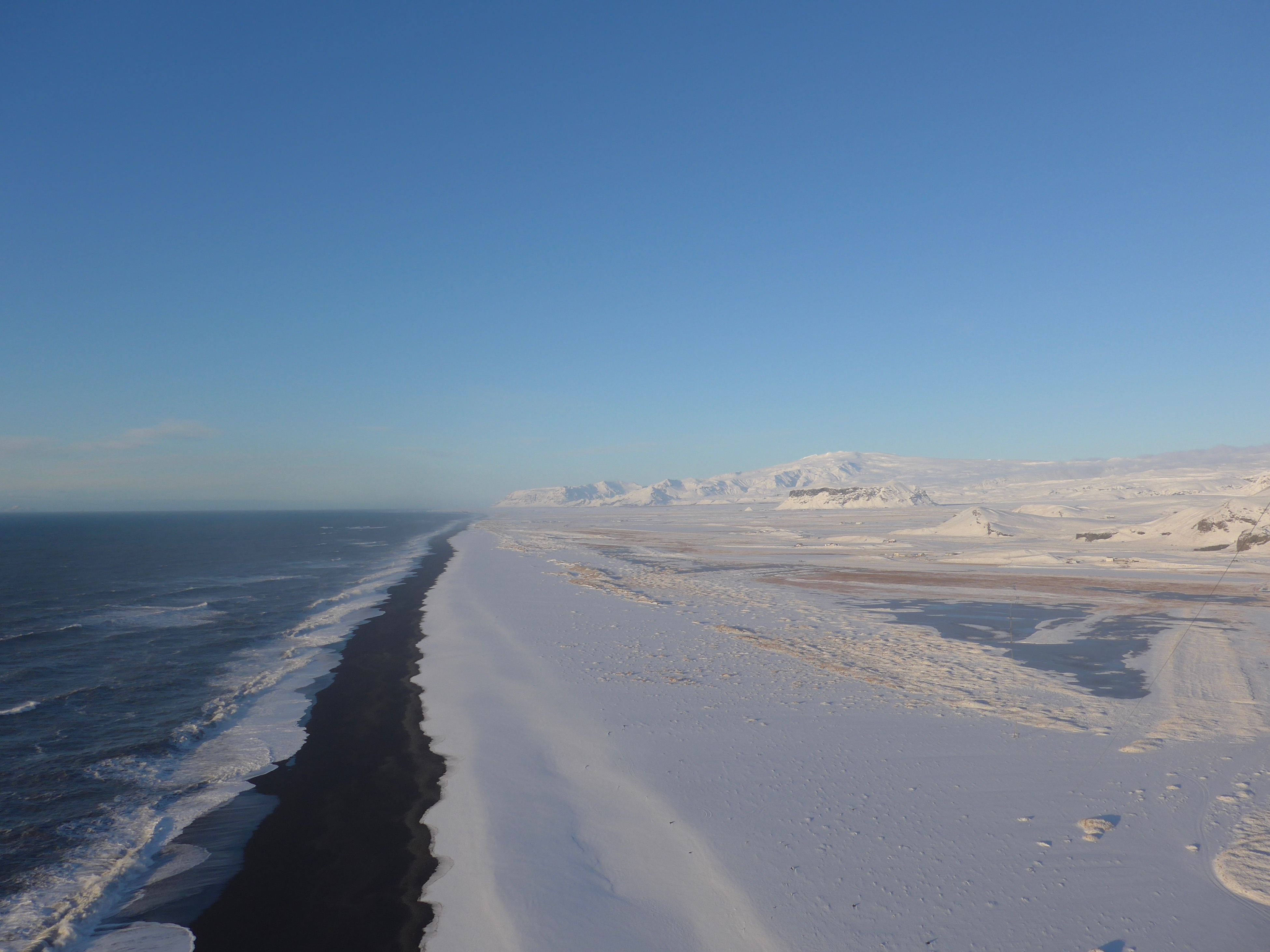
I am particularly drawn to cold wilderness landscapes. I have been to Antarctica, Patagonia, Lapland and Iceland. I have trudged through snow-filled environments at -25 degrees Celsius, and have sped through snowy forests and across frozen lakes with my own dog-sled team. In Iceland, I walked across a white isolated undulating plain, surrounded on all sides by low mountains, the smooth crunchy snow unmarked by human or animal; and later on that trip, I stood on a beach covered in fresh snow, the grey stormy Atlantic raging in front of me, and a strip of startling black sand where the waves had washed the snow away. I have walked alone in the silent, shadowless environment of a mid-winter Lapland day feeling an extraordinary peace in that strange, soft-edged land.


When I went to Antarctica, it occurred to me that if there were to be a physical landscape that represented the imagination it would be this place. Borderless, untouched, silent, monochrome, with towering mountains and broad sinuous glaciers, its seas covered with sheets of ice and huge icebergs the size of a city blocks.

I have stepped inside the imagination, I thought, over and over again.


Fiction and travelling are very similar. Both are a journeying into the unknown. Both require curiosity and courage, and both, if they are to be fully explored, require an active imagination. When travelling, you can join a tour or follow a guidebook, or you can wander – at will or whim – entering the current of a place, trusting in yourself even though all is strange and new. But it is precisely because you are in a new and strange place that you are willing to take a risk, for who knows what you will find and what you will see, and how it might change you.

And opening a new novel: you might begin with a vague notion of the story, but basically you enter the narrative, trusting that the author has done the necessary work for your fictional journey. You plunge in without knowing where you are going, but hoping at the end of reading, you’ll be moved and changed by the experience.

The comparison with travelling is equallly relevant when writing a novel. You start the project with a stack of blank pages and a head full of possibility. And you’re nervous too, just like the nerves as you board the plane. You’re heading into the unknown, you’re fearful that the journey might prove just too hard, you can’t conceive of your destination much less being confident that you’ll achieve it. But just with journeying in the real world, you have to trust, and you must have courage, and if things go wrong, if you take the wrong path, even enter the wrong country, you’ll imagine what might have been and you’ll change direction. And if you find yourself again in the wrong place, again you will imagine other possibilities and try another way.

Fiction and travel: I love them both. The one feeds the other, the one inflates and illuminates the other, and both of them are testimony to the power, the pleasure and the pitfalls too of that essential and unique quality of being human, namely, the imagination.

Next stop for me: Shetland.
And the next novel: it has begun…

For those of you in Melbourne, the Writers’ Festival has begun. Shaped around the theme of love there are some very seductive sessions. I am involved in 3 sessions, including an in-conversation with Marieke Hardy – Festival director and very fine friend – Saturday September 7, 10am. I suggest you go to the MWF website and check out the program. It really is a beauty.


BRING ME FICTION

Recently, while on a wilderness expedition with several others, I found myself talking with a man, a counselling psychologist. Apropos of nothing in particular, he said that when it came to novels he always read the last few pages first. It sounded like he was bragging. At this point, another member of our group told him I was a writer, a novelist.

‘What sort of novels do you write?’ he asked, not the least embarrassed.

I described them as contemporary fiction, character based, that while they told a story they also explored ideas.

‘Like what?’

‘The book I’ve just finished, Invented Lives, explores the notion of exile, the one before, The Memory Trap, looked at the complexities memory.’

He said he wouldn’t like my books. ‘They sound like too much hard work.’

I asked him who he liked to read. He said Dan Brown.

‘So you like plot,’ I said. ‘You like a fast-paced story.’

He nodded.

‘But still you read the end first.’

He nodded and smiled. Very self-satisfied he was.

‘You’re clearly not a man to take risks,’ I said, letting politeness off the leash. ‘You want to know the destination before you embark on the adventure.’ It was a comment made sharper by the fact that we were currently on a real-life adventure.

The barb missed its target. He was happy with his performance, indeed, he seemed a man entirely contented with himself. If he was aware of having insulted me, he didn’t care. It was hard to see him as a counselling psychologist.

I would be appalled if someone accused me of being risk-averse. It conjures up a warm-water-bath life, the years mounting up into decades of sameness. And I was appalled as a writer. Writers spend years shaping the journey, and this Dan Brown reader basically says, ‘Fuck you’ when he goes to the last page.

I was relating this incident to a friend of mine, one of Australia’s finest writers. D said she often consults the end of a novel first, in order to get the plot out of the way. She wants to savour the journey, and not be swept along in plot’s white water. She wants to linger in the language and the evolving fictional world. This is a desire I understand – and share. But I choose a different approach: I’ll succumb to the pull of the narrative on a first reading and return for the language and the nuances on a second – at least that’s the plan, but with so many books waiting to be read, the second reading is often little more than a cursory glance.

I suppose I should have been grateful that the counselling psychologist at least read fiction. Many men don’t. They read non-fiction and news sources, books and periodicals, but not fiction. They admit this not as some sort of shameful confession, but rather as a boast, as if to say ‘I am above the fluff of fiction. My time is too important to waste on stories.’ Their not reading fiction is not a fault in them, but a fault in fiction.

It is true that many women do not read fiction either, but in their case, they’ll announce – generally apologetically – that they are not really readers. They don’t read fiction because they don’t read anything.

At a cursory glance fiction can appear to be a curious anachronism in the fast-paced, multi-tasking digital age. The long, slow immersion in fiction, spending a weekend with Christina Stead or Julian Barnes becomes increasingly unlikely when 24/7 connection is the measure of not simply one’s place in the world, but of identity itself – a shockingly frail sense of identity, it must be said, one that can soar or collapse with a battery of likes/dislikes. And gauging others in this fast-paced world is similarly fraught when confronted with an avalanche of ever-changing data; it seems that the kitbag of tools once available for making considered judgements is emptying fast. We follow people like us; we visit sites that confirm our opinions; if we read news outlets (and most of us don’t) it will confirm our political views. The whole world is just a swipe or tap away, and yet for many people the day-to-day world seems to be getting smaller.

I’ve long believed that fiction makes the reader more understanding, more tolerant. The reason is obvious. Through fiction, you are exposed to characters – people – who are different to yourself: different life experiences, different family circumstances, different culture, different eras. For 12, 15 or 20 hours you are immersed in a world not your own, seeing it from the point of view of people who are not yourself, actually experiencing it from beneath the skin of strangers who are no longer strange. The other becomes a familiar through the process of reading a novel. This is an intense learning experience: it’s also an intensely enjoyable and stimulating experience, one that exercises concentration and attention and memory. There is no other activity that exposes a person to such a diversity of human experience in so concentrated and economical way.

So many works of fiction appear in lists of great books: The Iliad, The Divine Comedy, all of Shakespeare, Don Quixote, Wuthering Heights, Moby Dick, to mention only a few. Fiction exposes our complex human longings, it shows anxieties, jealousies, cruelties; it reveals shame, anger, joy and love. Fiction provides a context for understanding what drives us, what tempts us, what destroys and uplifts us. Fiction stops the flashing lights and flabby noise of our on-on-on lives and allows for reflection and understanding.

Imagine it: an hour at the end of every day, after work and before the night begins. You make yourself a coffee (or tea, or pour a glass of your favourite tipple), collect your novel and adjourn to the couch. You kick off your shoes, settle into its cushions; the dog (cat) jumps up, lies down next to you head on your thigh. Your phone is out of reach, in fact, it is out of hearing. You open your book, remind yourself where you are up to, and slip quickly and easily into a world of other people. This is bliss.