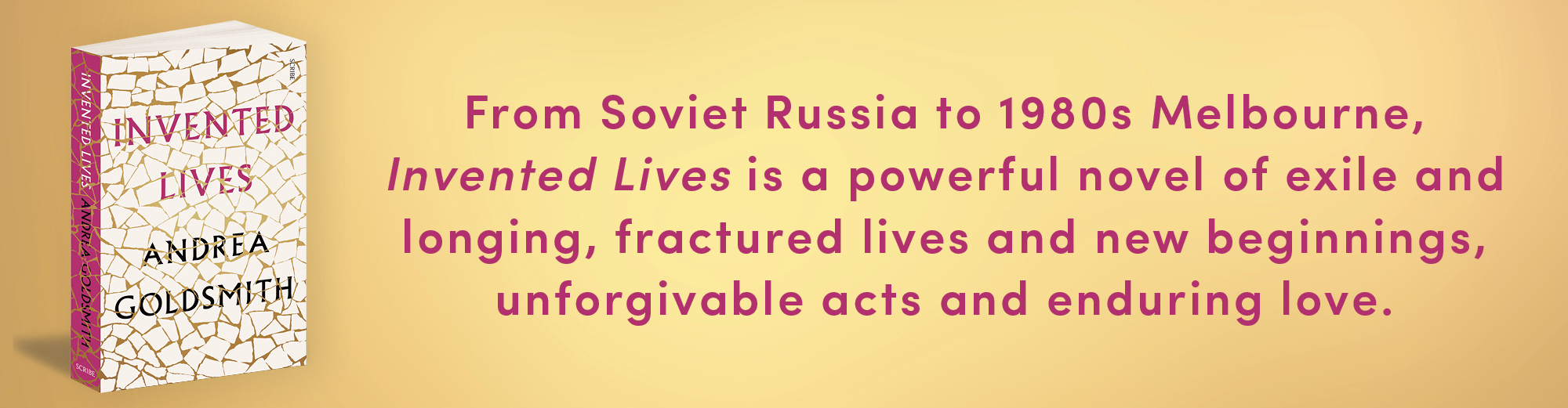
In the months since I last posted here, I finished my ninth novel, THE BURIED LIFE (to be published March, 2025), I’ve been snow-shoeing in the Arctic, and I’ve been going through old files, jotting ideas for new essays, and working on some existing ones. So – there will be less neglect of this site in the future.
I’ve never considered myself a short story writer even though my first publications were short stories. The long form of the novel suits me better. So I was surprised to discover a forgotten story, THE END OF PARADISE. It was published in the Sunday Age, January 5th, 2003 – still a broadsheet then, in their summer series of fiction, and yes, there was fiction in the newspaper back then.
In the original there was no space between paragraphs and proper indenting – so apologies for the format here.
THE SUNDAY AGE. 5/1/03
Part of the Summer Reading Series
THE END OF PARADISE
Emma Klein’s was the sort of beauty that held your gaze and turned it soft. If Tony Drummond were to capitulate to a shallow moment he would admit her face had been the initial attraction. And while it was joined by others in the time they spent together, the face remained the primary lure.
Of course it would be different now. In the 15 years since their affair, Emma had evolved from beautiful, unknown film student to beautiful, celebrated auteur. With brains and beauty she was, according to Tony’s colleague Jeannette Redi, the full quid. Which explained why Tony was now at his keyboard, pondering what to write to a woman he’d not seen for years, a woman who would not be much interested in him if she’d opted for suburban anonymity, much less an international film career.
The truth was that Tony had done her wrong, so wrong that if his own career prospects were any less precarious he would be leaving Emma Klein undisturbed in his past, neatly shaped by a memory devoted to his own well-being. Unfortunately, this same well-being was now under threat. Hurtling towards 50 and still not a senior lecturer, with no major publications and economic rationalisation ripping through the fibres of higher education, if Tony didn’t come up with a research project soon, it would be a redundancy package and time to kill.
Jeannette Redi had been right.
“You know Emma Klein?” Jeannette had been incredulous. About to leave the Faculty Club where she and Tony had eaten lunch, she settled back at the table and ordered another coffee.
“It was an age ago,” he said, in an attempt to curb her interest. “Long before Sup with the Devil. Long before she was famous.
“But don’t you see, Tony? She’s the answer to your problems. She’s your promotion. At the very least, she’ll save your job.”
Jeannette might have been less enthusiastic if she’d known the whole story. Tony had been a tutor, Emma his brightest student; he had done what tutors did prior to anti-discrimination and sexual harassment laws, she had fallen in love; he had pressed his body, she her devotion; he had provided an A-grade performance in sincerity, she had offered the authentic thing. After she handed in her final assignment he had tried to let her down gently, then less gently, then plain bluntly. He hadn’t asked for her love, he said, and he certainly had no use for it now.
He had behaved badly, no doubt about it, but then he’d always been susceptible to appearances and Emma Klein had appearances down pat. Her black hair flicked around her face, falling thick and touchable over her shoulders. The skin was richly olive, suggesting not-too-distant Sephardic ancestors. Then there were the eyes around which the whole face congregated.
Tony regarded himself as something of an expert in eyes. Not long before he met Emma, he had drafted a paper on the problem of eyes in literature. Eyes, he wrote, had been forced to reveal, hide, deceive, promise, condemn, betray, deny, love, hate, envy, even murder. This was plain absurd: eyes simply did not have such a large and readily interpretable repertoire. But after meeting Emma he had been forced to revise his opinion, although it was clear that most writers had been profligate in their use of what is an uncommonly rare phenomenon. Emma Klein’s eyes were large and shimmery and the colour of charcoal. Tony would imagine entering those eyes, soaking in them, stroking, floating, and finally coming to rest in paradise. Emma Klein’s eyes were explicit and unambiguous, and they expressed sex.
The coffee arrived, and with it, a thoughtful silence.
“She’s perfect,” Jeannette said finally. “Emma Klein is simply perfect. Superb body of work, solid queer credentials –”
“Not when I knew her.”
“I mean her films, Tony. And no critical study of her yet. A public persona but strangely elusive –”
“She never used to be –”
” – and in her prime. Cross Jacques Rivette with Kathy Acker,” Jeannette sucked the dregs from her coffee cup, “and you have tenure.
Believe me, Tony, I know these things.”
About this there could be little dispute, despite Jeannette’s being short on facts in Emma Klein’s case. Ten years younger than Tony, Jeannette Redi had entered the cultural studies department at senior lecturer level and was now in pole position for a professorship. If a career path could be paved with gold, that was Jeannette’s. She was queer before queer became fashionable and a lesbian long before lesbian chic. By the time fashion caught up, people were quite prepared to believe that Jeannette Redi, innovative theorist and charismatic teacher, was responsible for the gender meltdown that characterised queer theory. Being bright rather than brilliant, and with enough ethnicity to make her interesting but not so much as to cause discomfort, Jeannette was equipped with all the accoutrements of the successful academic.
With so much in her favour, and with academics being such envious adders, Jeannette should have been universally hated, particularly in a department so riven with factions that from one month to the next Tony might never find a friend in the staff room. Yet everyone liked her. Even during a brief lunch with a colleague there were smiles to return, hands to shake and comments to be exchanged with an assortment of passing academics, even a couple of physicists. For Jeannette, a room full of people was an orange to be squeezed, and how efficiently, how admirably, did she collect the juice.
Tony settled back into the leather while she finished with the physicists. The leather chair of his Faculty Club, at his university, the university he loved and did not want to leave. But unless he came up with a grant-attracting project and a publishable book, he’d be applying for jobs in god knows what corner of the country. Or, worse still, in New Zealand.
“What do you know about New Zealand?” he asked when the physicists moved off.
“OK to visit, but you wouldn’t want to live there.”
“People say that about Melbourne.”
“Only if they come from Sydney.”
Jeannette leaned forward to remove some fluff from her trousers. Her shirt was white and silky and fell away from her body, revealing the upper curve of her smooth brown breasts.
“Emma Klein, Tony. Or else you might find yourself teaching high school in Tasmania.” Jeannette paused to brush cheeks with the professor of politics. “She’s your promotion. I wouldn’t have mentioned it if you hadn’t admitted to knowing her.”
As he headed back to his office Tony replayed Jeannette’s arguments and realised she was right. Yet what he really wanted to write was a monograph on Shakespeare in film. Or to be precise, King Lear. For, with his own daughter now an incomprehensibly hostile 12-year-old, a critical examination of Lear had acquired a certain urgency.
He had as much interest in queer theory as he had in revisiting Emma Klein. Not that he hadn’t thought Sup With The Devil remarkable. Emma had always plunged into the big pools. She was the only young person Tony had ever met who had read Proust, not for a course requirement, but because she had been told it was the memory equivalent of conquering Everest.
Old and weighty ideas had always attracted her and there were plenty in Sup With The Devil. Such an immensely watchable film – some of the theorists had been suspicious of that – yet traversing the fundamentals of human existence. Evil and love fought it out in the final scenes and while it remained unclear which was the winner, there was a beguiling sense of satisfaction, of fulfilment when the credits started to roll.
That Emma had not done anything as good since had worried certain critics, but not Tony. Years ago he had planned a book about the cultural mismanagement of genius. How, when a work of genius is produced, if it is not immediately followed by another, the very fact of the original work of genius is used as evidence of the author’s failure. It was Tony’s contention that since works of genius, like geniuses themselves, are staggeringly rare, to produce one in a lifetime is to triumph over the odds.
The genius idea still interested him, and as he settled at the computer, he was tempted to resurrect his old notes, just a brief hesitation before going online and doing a search on Emma Klein. Both genius and Lear would have to wait.
*******************
When the invitation to address students and faculty at her old university had arrived, Emma’s first reaction was to decline. Then she quickly made the correction, reminding herself that old habits endure long past their relevance date, and that her pain over Tony Drummond was not only 15 years old it was also 15 years out of date.
Her agent had offered to accompany her, but Emma had long ago learned that when your past, so foreign to everyone else, catapults into your present it is better to withstand the collision alone. She was met at reception and taken to the conference room. She paused in the doorway, just a fraction of a second, in order to find him before he saw her. And there he was, across the room and turning towards her. And in that first sighting of the man who had seized her young heart and smashed it, a flushing of fear.
After 15 years. Fifteen years, nearly half a lifetime. How tenacious are one’s old pains, she thought, and how shamelessly inappropriate. She forced on herself a composure she did not feel, and by the time he was leaning in to kiss her cheek, she appeared quite calm.
His skin did not feel familiar, which surprised her. For in that typical journey of male maturation, commencing with an almost feminine boyishness in the 20-year-old and ending with the thickened features and coarsened skin of the fully-fledged man, Tony Drummond had been spared. He was, perhaps, a weaker, blurred version of his younger self, but there was still the same softness, the sleek blondness, the same grace that captured her heart all those years ago. Yet in the older man, faintly disturbing. His skin so smooth and unmarked by concentration or determination. No lines about the eyes, no scoring of the brow, no confusion or sorrow or amusement. It was an unlived-in face, she found herself thinking, a man untried and untravelled, as if he had spent the past 15 years cocooned among kind and unchallenging people in whom any extremes of emotion had been nicely dampened, and any failures banished.
He still sported the look of those beautiful young men in BBC dramas set in Oxbridge of the ’20s and ’30s; in fact, many people used to assume he was gay. He once confessed to her that he had actually tried a man, bisexuality being an ideal option for a male with a large sexual appetite in the pre-AIDS era. But it was not for him. Tony Drummond liked the truly effeminate; he liked women.
He was offering her a drink, and although Emma wasn’t thirsty she let him insist. She watched as he crossed the room. He still dressed with casual ease, although instead of the old suede jacket there was now a tailored blazer, and the hand-knitted scarf had been replaced by a Burberry. But the washed-out Levis looked just the same.
As he poured the drinks, his back towards her, a memory surfaced of a day in the country not long before the end of their relationship. Tony had proposed a walk along a narrow bush track he had recently discovered with the woman who was shortly to replace Emma in his extra-curricula affairs. It was, he said, only a 15-minute loop through rainforest and down to a dark, lush palm gully, the sort of limited rural romp with which Emma, a dedicated city girl, could cope.
Whether it was the wrong track or they’d missed a turning, they were still walking an hour later. Yet Emma had not minded. Such pleasure to be found in the movement of his body as she trailed after him along the narrow track. He darted over the rough ground, sure-footed and graceful as a deer. And Emma followed, tripping now and then over obstacles in the path, watching the curve of his buttocks beneath the well-worn denim, the square bulge of notebook in his back pocket, but most of all the dance of his body, a light rhythmic spring – still noticeable in his gait today – and so nimble as he skirted logs and leapt over rocks and roots.
She had commented on his agility, and he had laughed: he’d had plenty of practice avoiding the landmines at the university, he said.
They had by this stage reached the palm gully. It was only mid-afternoon, but dark as dusk and very still. They stood in the thick green undergrowth beneath the canopy of palms. In the distance was the faint whisper of wispy gums in the light afternoon breeze. It was one of those sublime moments, so rare in a life, when you’re not alone but the solitude is complete.
She had draped an arm around him, and her hand grazed his buttocks. The denim was soft and thin and she had felt his muscles tighten, and right there on the narrow track where anyone might have stumbled upon them they made love. Afterwards, as they walked back, she realised she wanted to spend the rest of her life with him. He was perfect and she loved him.
Now as she watched him come towards her with their drinks, this man who had once stolen her heart, she was aware of that raw nervy reluctance when long-held beliefs are finally challenged. How willingly are old sufferings transformed into sacred cows, she was thinking, and how mindlessly. And as she took the drink – her hand now quite steady, her heartbeat slow – she felt like a stranger to herself, a sudden brief disorientation, rather like that moment when you first slip into new clothes and before you see how well the style suits you.
She started to laugh; she couldn’t stop herself. It was an explosion of fantastic energy as an old demon became domesticated. One minute she’s a snivelling bundle of fear and the next she’s sharing a drink with him. She’d lived hard and full, she had a son she adored whose father was proving a far better ex-husband than he had ever been a husband, she’d had lovers and she had many friends, she’d worked and travelled, but always that chill spear plunging through her whenever she thought of Tony. And now it was gone. In a flash it was gone.
Emma was about to enquire about his life, disinterest making her courteous, but she was interrupted by Jeannette Redi, the woman who had invited her to the university. Tony slipped away and did not appear again until her presentation was about to begin. He couldn’t wait any longer, he said. He had a proposal: he wanted to write about her and her work.
Emma indicated the waiting audience, this was not the time for discussion, and moved towards the podium. She was astonished: only a fool or a masochist would give herself away cheaply more than once.
The audience settled into silence, a room full of strangers and the one familiar face warmly smiling up at her. She glanced at her notes. The title of her presentation, “My Life in Art”, had suddenly taken on new possibilities.
“When life becomes art,” she began, “then you’ve moved on.”
For half an hour she talked in that confidential, faux-private style common among seasoned performers, while at the same time aware of the nudge and texture of the film she would next make, at first faint but becoming clearer by the minute. It was exhilarating, as the first glimmerings of a new work always are.
In the audience Tony was soaking her up. The mature Emma Klein had all the old attractions and a great deal more. She would be such an asset on the media circuit when his book was published. He’d not been this excited in years. He listened, he looked, he took notes. And when Emma finished, he dashed to her side. But she couldn’t stay, she said, as she slipped his card into her bag, she was already late for another appointment.
Over the next month he waited to hear from her. He rang her agent several times. The agent never returned his calls. He was not discouraged; he was working well. On the day Jeannette buzzed him suggesting a coffee, he was happy to oblige. He had, he believed, mapped out a structure for his Emma Klein book, and the person who deserved to see it first was Jeannette.
When she paid for their coffee and cake he should have been warned. And when she plied him with questions about Emma’s early life he took it as nothing more than her on-going interest in his work. Even when she came to his office again and again over the next few weeks to ask about Emma, he was blind to his role as literary cuckold. It took a hefty ARC grant to Jeannette Redi and a sympathetic graduate student to enlighten him.
***************
The redundancy package was generous – the university was eager to be rid of him – and life in far north Queensland was far more congenial than its reputation among the southern intelligentsia had suggested. The sympathetic graduate student was fortunately less committed to her studies than she was to her supervisor, and separation rather than Shakespeare had been the answer to the problems with his adolescent daughter – with his former wife too.
As for Emma Klein’s new film, The End of Paradise, and the simultaneous release of Jeannette Redi’s new book, distance protected Tony from the gossip and media hype. His well-being, the focus of a lifetime’s ambition, remained intact.


 Andrea Goldsmith